Additive Manufacturing – Lower Hutt
3D Printing
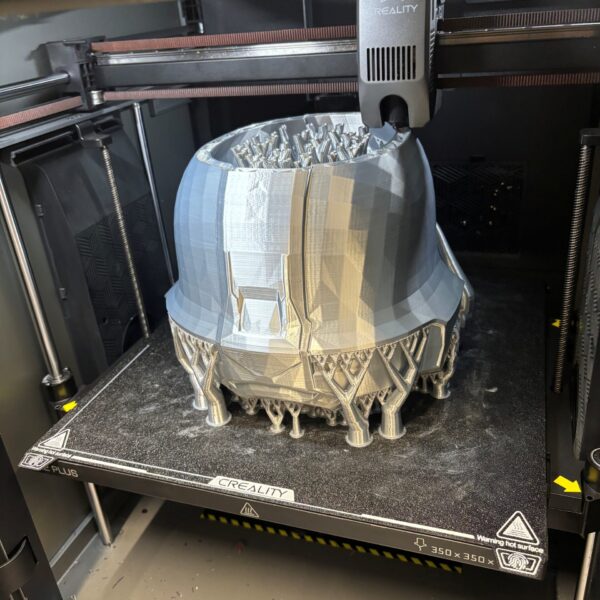
Prototypes, jigs and functional plastic parts, printed in-house by engineers who machine for a living.
3D printing that works alongside our CNC machines
Myriad Engineering offers in-house 3D printing in Seaview, Lower Hutt, backed by the practical knowledge of our precision engineering team. We print prototypes, jigs, fixtures and short-run plastic parts for manufacturers across New Zealand.
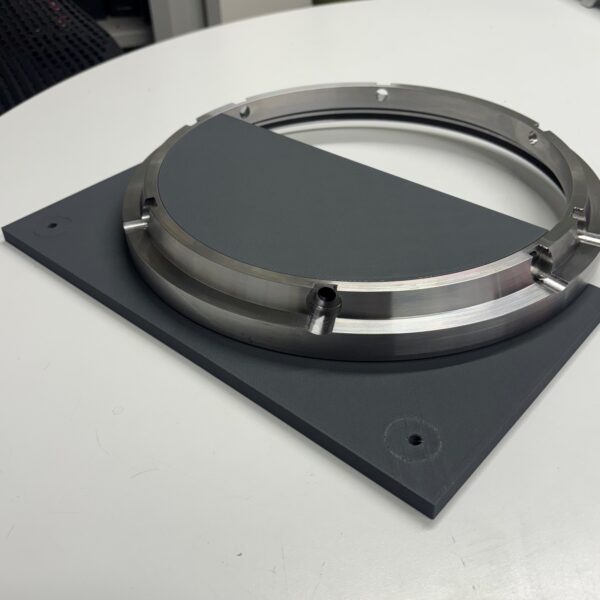
Because we are a precision engineering company first, we look at your part the way a manufacturer does. We’ll tell you whether it is best printed, machined, or a mix of both, and we can combine printed parts with CNC milled and turned components, fabrication and assembly.
Print a prototype to check fit and form before committing to machining, or get a one-off replacement part made without the cost of tooling.
Send us your file
STEP, STL or 3MF files are ideal. No CAD model? Send a drawing, sketch or the old part and our team can model it in Fusion 360.
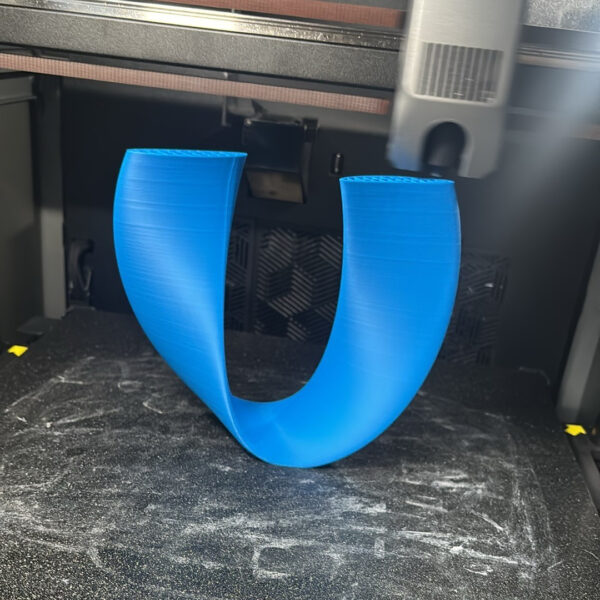
300 × 300 × 300 mm
Build volume per part
Heated chamber
Enclosed printing for ABS, ASA, nylon and CF grades
Most plastics
From everyday PLA to carbon-fibre filled nylon
Since 1972
Over 50 years of Wellington engineering
What we print
Rapid prototypes
Test fit, form and function in days, then move to machined parts with confidence.
Jigs, fixtures and tooling
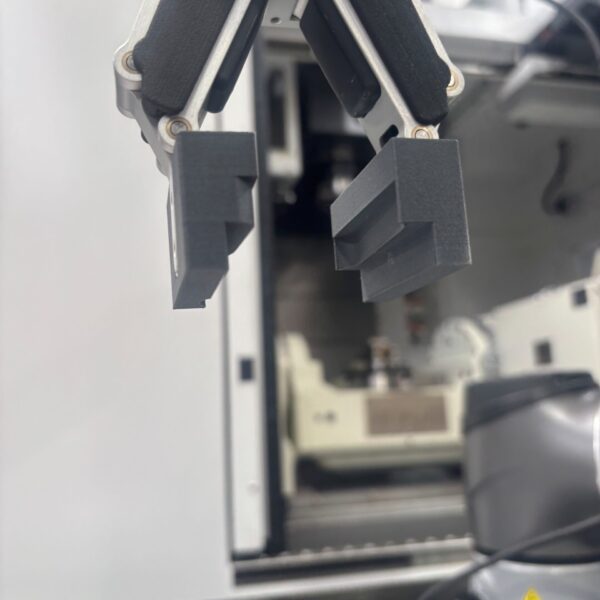
Assembly aids, drill guides, soft jaws and check gauges for your production floor.
Short-run end-use parts
Enclosures, brackets, covers and housings in low volumes, with no tooling cost.
Replacement parts
Obsolete or hard-to-source plastic components, reverse-engineered from the original.
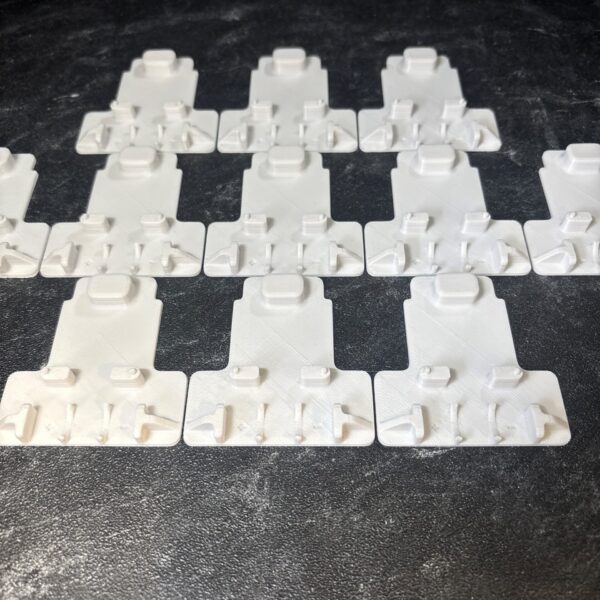
Materials
We print in most engineering plastics. Not sure which suits your part? Tell us how it will be used and we’ll recommend one.
| Material | Key properties | Typical uses |
|---|---|---|
| PLA | Accurate, good surface finish, low cost | Concept models, fit checks, display parts |
| PETG | Tough, slightly flexible, chemical resistant | Functional prototypes, covers, guards |
| ABS / ASA | Impact and heat resistant; ASA is UV stable | Enclosures, housings, outdoor parts |
| Nylon (PA) | Strong, wear resistant, low friction | Gears, bushes, clips, wear parts |
| Carbon-fibre filled (PA-CF, PET-CF) | Stiff, light, dimensionally stable | Jigs, fixtures, structural brackets |
| PC (polycarbonate) | Very tough, high heat resistance | Demanding functional parts |
| TPU | Flexible, rubber-like, abrasion resistant | Seals, grips, bumpers, protective boots |
How it works
1. Send your file
Share a CAD model, drawing or sample part, with quantity and how it will be used.
2. We review and quote
Our engineers check printability, suggest a material and confirm price and lead time.
3. Print and check
Parts are printed in-house and checked against your requirements, on our Hexagon CMM where needed.
4. Finish and deliver
Supports removed and parts cleaned up, ready for collection or courier anywhere in New Zealand.
Why print with Myriad?
You’re not dealing with a print bureau. You’re dealing with a manufacturer that has supplied more than 10 million components to New Zealand industry.
Engineering advice built in
We’ll flag design changes that make a part stronger, cheaper or easier to make.
Printed and machined, one supplier
Combine printed parts with CNC milling, turning, fabrication and assembly.
Prototype to production
Prove a design in plastic, then move straight to machined production in our workshop.
Local and responsive
Based in Seaview, Lower Hutt, so you can talk to the people making your parts.
3D Printing FAQ
STEP, STL and 3MF are best. We can also work from PDF drawings, sketches or a physical sample.
Single parts up to 300 × 300 × 300 mm. Larger parts can be printed in sections and joined.
Accuracy depends on the material and geometry. Where a feature needs a tight tolerance, we can print it oversize and finish it on our CNC machines.
Lead times depend on part size, quantity and material. Send us your requirements and we will confirm an estimated turnaround when quoting. Rush jobs may be possible by arrangement.
For one-offs, prototypes and complex plastic shapes, usually yes. For higher volumes or metal parts, machining is often better value. We’ll tell you which makes sense.
Have a part you need printed?
Send us your file and we’ll come back with a quote.